
If you need headphones for studio use, the right pair depends on what you're doing. Closed-back headphones and wired IEMs are better for recording, since they don't leak much audio into a microphone and can help isolate you from sounds around you. Open-back headphones are better suited for mixing and mastering, since their design creates a more spacious, natural sound, though they leak audio and don't block out much noise. Comfort, sound quality, build quality, and even cable design are also important if you'll wear them for long sessions: many of the best studio headphones also have a coiled cable to give you enough range to move around your studio.
We've tested over 910 pairs of headphones, and below, you'll find our recommendations for studio use. Also, check out our recommendations for the best DJ headphones, the best headphones for music, and the best audiophile headphones.
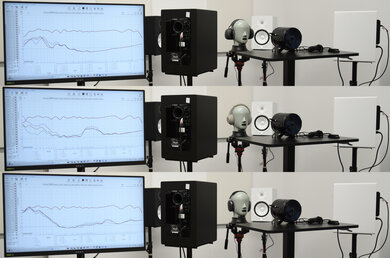
Our How We Test Headphones article takes you behind the scenes in our lab. You'll learn how we choose and purchase products and dive into the details of our review philosophy, from testing and scoring to writing and editing.
You can also discover how we produce recommendations like this one so that you can find the best headphones (or earbuds!) for your needs.
-
Best Closed-Back Studio Headphones
 Audio Reproduction AccuracyFrequency Response ConsistencyNoise IsolationComfortSee all our test resultsPeaks/Dips
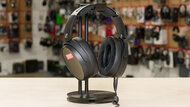
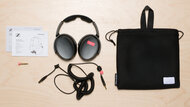
The best studio headphones with a closed-back design are the Sennheiser HD 480 PRO. Closed-back headphones offer a few advantages over their open-back counterparts, the most notable of which is a degree of passive isolation from your surroundings. This makes them a great fit for applications like tracking, where you want to focus on the task at hand. They also leak little audio, reducing the chance that a microphone will pick up headphone bleed during quieter vocal takes, provided you don't listen at high volumes. These headphones also have a detachable coiled cable that plugs into either ear cup, letting you route it away from an instrument while tracking.
Their sound profile is balanced, with controlled, accurate bass and mids alongside slightly subdued treble. Instruments and vocals sound clear and detailed, while kick drums have some extra thump without overwhelming the mix. The smoother treble can also help reduce fatigue during longer tracking or mixing sessions. That said, their bass delivery can vary depending on whether you wear glasses or have long hair. Still, if you're looking for closed-backs for tracking and monitoring, you can't do much better than these.
-
Best Mid-Range Closed-Back Studio Headphones
Audio Reproduction AccuracyFrequency Response ConsistencyNoise IsolationComfortSee all our test resultsPeaks/DipsFor something a little more wallet-friendly, try the FIIO FT1. These striking closed-back cans come in an array of natural wood finishes and feature comfortable earpads that relieve pressure during long tracking sessions. As with other closed-back headphones, they attenuate external sounds and don't leak much audio. Their wired design ensures low-latency playback, and they come with a 1/4" to 1/8" adapter to suit both professional and consumer-end devices.
Their sound profile closely follows our target, with some extra bass and a detailed mid-range and treble. But if you wear glasses, you might find their arms break the seal the headphones' earpads form with your head, which can result in a noticeable drop-off in bass. This won't affect everyone, though, and you can always look into aftermarket earpads to resolve the issue. That said, the Sony MDR-7506 are studio staples that make a good alternative to the FIIO because they deliver consistent audio across wears and wearers. They also have a bright, detailed sound that can be helpful when doing detailed edits or checking for clicks and pops in audio. But, in general, the FIIO offer the more refined sound profile, as long as you can get a good fit.
-
Best Budget Closed-Back Studio Headphones
If you're on a tight budget or need several pairs of headphones and want an affordable option, it's worth considering the Audio-Technica ATH-M20x. These headphones aren't as well-built as the FIIO FT1, but they offer good sound at a lower price. They look similar to the more expensive Audio-Technica ATH-M50x, which you can read about in our Notable Mentions, but have a more plasticky design with a thinner metal frame and exposed cables.
Their sound lacks a bit of low bass for closed-back headphones, but they offer a flat, balanced mid-range response that reproduces voices and instruments clearly and accurately. However, their significant treble roll-off makes sounds like cymbals feel dull. Still, they have consistent audio delivery, so you're more likely to hear the same sound across reseats, and they have a decently comfortable fit for long hours in the studio. If you're dealing with a tight budget or buying a few pairs of headphones in bulk for tracking in a studio, they're decent performers.
-
Best Open-Back Studio Headphones
Audio Reproduction AccuracyFrequency Response ConsistencyNoise IsolationComfortSee all our test resultsPeaks/DipsOpen-back headphones are often a great choice for mixing, and the Sennheiser HD 800 S are just about the best you can get. Their design helps lend your audio a natural sense of space, which is a little more speaker-like than the audio produced by closed-back headphones. That said, these cans do come with a hefty price tag, so they won't be for everyone. If you can afford them, you get a flat sound profile with an accurate mid-range response that ensures vocals and lead instruments sound clear and accurate. Their treble response is also generally close to our target, with a touch of extra mid-treble that adds presence to vocals. Like most open-back headphones, they struggle to reproduce the thump and rumble of low bass.
These headphones come with a detachable audio cable, as well as an extra cable in the box, along with a 1/4" to 1/8" adapter. They also have a sturdy, high-end build and a very comfortable fit. Unfortunately, the pin that keeps the hinges together is prone to coming loose over time, which is annoying, and some may prefer a bit less plastic in the build at their price. The equally high-end HiFiMan Arya Stealth Magnet Version don't suffer from this problem and have more low-end thump, but they're bulkier and heavier. That said, they're still worth considering for mixing.
-
Best Mid-Range Open-Back Studio Headphones
Audio Reproduction AccuracyFrequency Response ConsistencyNoise IsolationComfortSee all our test resultsPeaks/DipsIf you're interested in open-backs that output a bit more bass than the Sennheiser HD 800 S, check out the Sennheiser HD 490 PRO. These versatile open-backs create an immersive, open, and natural-seeming soundstage well-suited for mixing and mastering. Their dual-earpad design helps them stand out from the crowd: both sets of pads are comfortable but offer different feels and slightly different frequency responses. Their balanced sound profile causes voices and lead instruments to sound crisp and detailed. Perhaps surprisingly for open-backs, they're also able to output a fair bit of bass, which helps add thump and rumble to kicks and basslines.
Their build quality suffers due to their plastic-heavy construction and flimsy yokes. If you're looking for a pair of open-back cans that feel more durable and feature premium materials, it's worth looking at the Audeze MM-100. The Audeze also sound open and spacious. However, their bass and treble are both fairly recessed compared with the Sennheiser HD 490 PRO. That said, their smoother treble can help reduce fatigue during long mix sessions.
-
Best Lower Mid-Range Open-Back Studio Headphones
Audio Reproduction AccuracyFrequency Response ConsistencyNoise IsolationComfortSee all our test resultsPeaks/DipsThe Sennheiser HD 560S are some of the best value headphones on the market, because they're a more affordable entry point to Sennheiser's accurate sound. Their PRTF measurements indicate that the audio they produce sounds less like an angled reference monitor than the Sennheiser HD 490 PRO. But on the plus side, they have a flatter mid-range that more accurately reproduces instruments, and they also have a better peaks and dips performance, meaning they don't deviate much from their flat sound profile. Fans of jazz and pop music will appreciate this flat sound, but techno nerds might wish for more bassy thump. That said, their lack of low and mid bass is fairly typical of open-backs.
The Sennheiser are more stable on the head than the HD 490 PRO, which is a bonus if you love to bounce in your seat while mixing a tune. They're lightweight and have a comfortable fit for most people, but their build is even more plastic-heavy than the more expensive HD 490 PRO. Still, they're very hard to beat at their price point.
-
Best Budget Open-Back Studio Headphones
Audio Reproduction AccuracyFrequency Response ConsistencyNoise IsolationComfortSee all our test resultsPeaks/DipsThe Philips SHP9500 are the best budget open-back studio headphones we've tested. At this price point, there are few choices for open-back headphones. Many of them have a flimsy, plasticky build quality and don't feel very durable. However, the Philips feel decently well-built and are worth considering for their balanced sound profile and immersive soundstage. These headphones suit most genres, although EDM fans may miss some low-bass thump. Like the Sennheiser HD 560S, their mid-range is well-balanced and renders vocals and instruments accurately and with plenty of detail. But the Philips have a slightly boosted treble range that can make cymbals sound piercing at times.
Like most open-backs, these comfortable headphones leak a lot of audio, so they're better suited for mixing than recording. However, they'll feel pleasant to wear for long sessions, so long as you're not in a noisy environment, since their open design also means they do a bad job blocking out any audio around you.
-
Best Studio IEMs
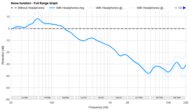
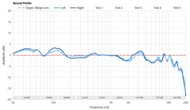
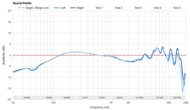
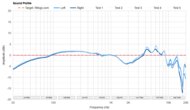
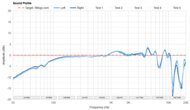
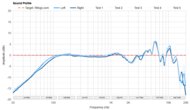
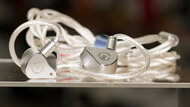
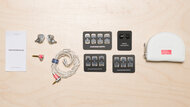
Audio Reproduction AccuracyFrequency Response ConsistencyNoise IsolationComfortSee all our test resultsPeaks/DipsWhile IEMs haven't always been common in studio environments, they've become increasingly popular thanks in part to their use in live performance. Their noise-isolating seal is a strong asset during tracking, and they leak even less audio than closed-back headphones. If you're looking for some of the most accurate IEMs on the market, the CrinEar Reference are a great option. These premium in-ears have a slightly warm sound with tight bass and an incredibly accurate mid-range, so vocals and instruments sound detailed and accurate. Their treble rolls off with the foam tips, which takes the edge off bright cymbals during long listening sessions, although the silicone tips produce a brighter sound. They're comfortable, well-built, and include a wide selection of ear tip sizes in both silicone and foam, and even come with a hard case.
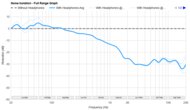
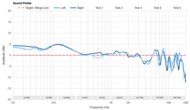
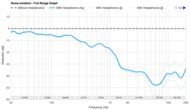
They don't have ANC, but they do a good job blocking out mid-range sounds like voices. However, they aren't as effective against bass-range sounds. Still, hearing the drummer's groove while you lay down a guitar solo can be a good thing, especially since their analog connection adds negligible latency. The detachable cable includes interchangeable 3.5 mm and 4.4 mm connectors, though the lack of USB audio limits their versatility. If you'd like IEMs that can also double as casual-use headphones for checking mixes while you're out and about, consider the Meze ALBA. The Meze don't block as much noise as the CrinEar, so they're not quite as useful while tracking, but their included analog-to-USB-C adapter and USB-A attachment let you connect directly to phones and computers.










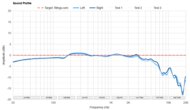
Notable Mentions
-
AKG K371:
The AKG K371 are closed-backs with a pretty balanced sound profile and a great leakage performance, making them a viable alternative to the FIIO FT1. However, they aren't as comfortable and lack the FIIO's hard-shell case.
See our review -
Audio-Technica ATH-M50x:
The Audio-Technica ATH-M50x are a solid alternative to the FIIO FT1. These veteran headphones are decently comfortable and comply well with our target curve in the bass range, which can help with identifying low-frequency resonances in your audio. However, they're hampered by disappointing stereo matching that can cause sounds like voices to be inaccurately located in the stereo field.
See our review -
HiFiMan Edition XS:
The HiFiMan Edition XS are open-back, planar magnetic headphones. They put out more thump and punch in the bass than the Sennheiser HD 560S, but they're not as comfortable to wear for long sessions, and they're less stable on the head.
See our review -
Philips Fidelio X2HR:
The Philips Fidelio X2HR are well-built open-back headphones with a wider spatial presentation than the Sennheiser HD 560S. However, their treble isn't as well-controlled, and they're less stable on the head.
See our review -
Superlux HD 681:
The Superlux HD 681 are semi-open-back headphones. This design means they leak less audio than the Philips SHP9500, and they also produce more low-end thump. However, they're less comfortable and less well-built than our pick, and their cable isn't detachable, so you may need to replace the headphones if it breaks.
See our review -
MOONDROP Blessing 3:
The MOONDROP Blessing 3 are comfortable IEMs with a brighter sound than the CrinEar Reference. They're well worth considering if you find the CrinEar's foam-tip tuning too dark. However, the CrinEar deliver more consistent sound between wears and also block out more noise around you.
See our review
Recent Updates
Sep 04, 2026:
The Sennheiser HD 480 PRO are our new 'Best Closed-Back' pick because they're more affordable than the Focal Azurys and their sound profile is closer to our target curve. The CrinEar Reference are our new 'Best Studio IEMs' for their accurate sound and good noise isolation. We've moved the MOONDROP Blessing 3 to our Notable Mentions for anyone who prefers a brighter tuning than the MOONDROP, albeit at the expense of some noise isolation performance.
Jul 03, 2026:
We've checked that our picks are still accurate and readily available, and clarified the trade-offs between each recommendation.
May 11, 2026:
We checked that all our picks are accurate and in stock, but haven't changed them.
Mar 12, 2026:
The Focal Azurys are our new pick for closed-back headphones. We've also added the Sony MDR-7506 as an alternative to the FIIO FT1 and moved the Audio-Technica ATH-M50x to our Notable Mentions. The MOONDROP Blessing 3 replace the THIEAUDIO Monarch MKIII as our IEM pick. Finally, the HiFiMan Edition XS replace the HiFiMan Sundara 2020 in our Notable Mentions.
Nov 12, 2025:
This article has undergone a major overhaul to bring it in line with recent Test Benches. We've added a new IEM pick, with the THIEAUDIO Monarch MKIII as the top pick and the Meze ALBA as an alternative. The best closed-back pick is now the Beyerdynamic DT 1770 PRO, and the FIIO FT1 are the mid-range closed-back pick. The Sennheiser HD 490 PRO have replaced the HiFiMan Edition XS as our mid-range open-back pick too, and the AKG K371 have been reinstated as a Notable Mention.
All Reviews
Our recommendations above are what we think are currently the best studio headphones for most people across different price points and studio use We factor in the price (cheaper headphones win over pricier ones if the difference isn't worth it), feedback from our visitors, and availability (no headphones that are difficult to find or almost out of stock everywhere).
If you'd like to choose for yourself, here's the list of our reviews for headphones with good audio reproduction accuracy. Be careful not to get caught up in the details. There are no perfect headphones. Personal taste, preference, and listening habits will matter more in your selection.